Saturday, March 29, 2025

CANVA NEW APPLICATION

INTRODUCTION:
 Global warming is a critical issue with rising temperatures, melting ice caps, sea-level changes, extreme weather, and increasing greenhouse gases.

Project name:CANVA NEW APPLICATION


      This is the work in boys the project.


A relay is an electrically operated switch. It consists of a set of input terminals for a single or multiple control signals, and a set of operating contact terminals. 

Light-up is an app that magnifies the resolution of image, which can make image in mobile phones look clearer.

After selecting the photo and touch 'light-up' button, the program will be executed automatically. 


The add of student summer camp.


Canva is a free, user-friendly graphic design platform that allows users to create a variety of visuals, from social media posts and presentations to business cards and flyers, using a drag-and-drop interface and professionally designed templates. 

    CANAVA app is first experennse.


Thursday, March 27, 2025

Smart Garden


Smart GardenTeam-1
1Arranging Garden plants1Garden arrange
2Material List2Material list
3Material Purchase3Material purchase
4Plumbing pipe line system4Plumbing Sensor testing
5Arduino and sensor coding5Arduino code writing
6App development
7Assembly of complete system
Team-2
8Testing1Arduino and sensor coding
9Integrating IOT system with manual system2
Mobile app development
10Final Testing3Testing
4Integrating IOT system with manual system
5Final Testing

Friday, March 21, 2025

Solar panal light

                                     PROJECT TITLE :-  SOLAR PANNAL LIGHT


**COMPONANTS**


1) LED:


          An LED is a semiconductor light source that emits light when current flows through it. LEDs are highly energy-efficient, durable, and long-lasting compared to traditional light bulbs. They are used in various applications, including displays, indicators, and lighting solutions due to their compact size and low energy consumption.

2)SWITCH:


How a Switch Works

  • A switch receives data packets and determines their destination using MAC addresses.
  • It forwards the packets only to the intended recipient, unlike hubs, which broadcast data to all devices.
  • This reduces network congestion and improves performance.
3)Inverter:

Key Features of an Inverter

DC to AC conversion for usable electricity
Efficiency in power conversion (typically 90–98%)
Surge protection to handle high-power demands
Smart monitoring for energy tracking
Battery integration in hybrid and off-grid models

4)Battery:


Why Are Batteries Important?

  • Energy Storage – Stores excess electricity for later use.
  • Power Backup – Provides electricity during power outages.
  • Grid Independence – Reduces reliance on the power grid in solar and off-grid systems.
*Resistor:A resistor is a passive electronic component that limits or controls the flow of electrical current in a circuit. It works by resisting the current, causing a voltage drop across its terminals. Resistors are essential in electrical and electronic circuits for various functions like voltage division, current limiting, and signal conditioning.

Wednesday, March 19, 2025

Smart bulb using electronic components

 Project:

Smart bulb using electronic components

Introduction:

A smart bulb is a lighting device that can be controlled remotely using electronic components, such as microcontrollers, wireless communication modules, and sensors. It allows users to turn the light on or off, adjust brightness, and sometimes change colors through various interfaces like a smartphone app, voice commands, or even through automated schedules.

Key Electronic Components of a Smart Bulb:

  1. Light Emitting Diode (LED):

    • The primary source of light. LEDs are energy-efficient, long-lasting, and can provide a range of colors depending on the design.
  2. Microcontroller/Processor:

    • The brain of the smart bulb, it controls the bulb's functions, processes inputs from sensors, and manages communication with external devices. Common microcontrollers used are Arduino, ESP8266, ESP32, or other custom designs.


Arduino:

Key Components of Arduino:

  1. Arduino Board:

    • The physical board contains a microcontroller that can be programmed. Some popular Arduino boards are:
      • Arduino Uno: The most popular and beginner-friendly board.
      • Arduino Nano: A smaller version of the Uno, good for compact projects.
      • Arduino Mega: A board with more I/O pins, ideal for complex projects.
      • Arduino Leonardo: Features built-in USB communication, allowing it to act as a mouse or keyboard.
    • Each board comes with different features like the number of I/O pins, communication ports, and memory size, so you can choose the one that fits your project's needs.
    •                              protect low-voltage 


    • The Evolution of Light Bulbs:

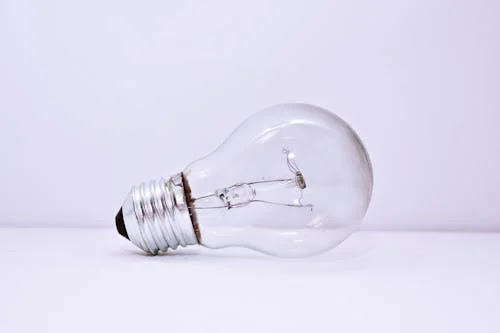
      The light bulb has undergone significant changes since its invention in the late 19th century. The incandescent light bulb, invented by Thomas Edison in 1879, was the first commercially successful electric bulb. It provided a much safer and more efficient way to light homes compared to traditional gas lamps.

    • Relay with Arduino Uno R3: 7 Steps - Instructables

      Using a relay with an Arduino Uno R3 allows you to control high-power devices (such as lights, motors, or fans) using the low-power Arduino board. A relay acts as a switch that can turn these devices on or off, based on the signals from the Arduino. Below is a simplified version of the steps involved in connecting a relay to the Arduino Uno R3 to control a device.

      Materials Needed:

      1. Arduino Uno R3
      2. Relay module (preferably a 5V relay)
      3. Jumper wires
      4. Breadboard (optional, but recommended for prototyping)
      5. High-power device (e.g., lamp, motor, or fan) to control
      6. External power supply (for high-power device)
      7. Diode (optional, for protection)
      8. Resistor (optional, for safety)


      9. Types of Relays

        • Electromechanical relays (EMR): Traditional relays that physically move contacts to make or break a circuit.
        • Solid-state relays (SSR): Use semiconductor devices instead of mechanical contacts, offering faster response times and no moving parts.

      10. Uses and Benefits:

        • Educational Tool: It is widely used in schools and universities to teach students basic programming concepts.
        • Prototype Development: It is a great tool for quickly building prototypes or proofs of concept for mobile applications.
        • No-Code Development: Ideal for users who want to create apps but do not know traditional programming languages.
        • Community Support: A large online community of users and tutorials is available to help new developers learn and solve problems.

Xiao Board Connection

Title: Xiao Board Connection Components:  1. Seeed XIAO DEV Board. 2. SPDT 5V Relay. 3. 12 Volt Adapter 4. jumper wires 5. solenoid valve 6....